
Welcoming your baby into the world is a beautiful moment- congratulations! But within minutes, you might find yourself flooded with questions. What tests will my baby need? Are they safe? Why are they done so soon after birth? It’s completely normal to feel a little overwhelmed. Don’t worry, we’re here to help. Soon after birth, your baby will undergo a few important health checks called newborn screening tests. These simple tests help doctors detect certain health conditions early, often before any symptoms appear. Early detection allows treatment to begin quickly and helps protect your baby’s long-term health.
To make things easier for you, here are the top 10 questions parents commonly ask about newborn testing, along with clear answers to help you understand what to expect.
Common Questions Parents Ask About Newborn Testing
As we already mentioned, here are the 10 most common questions that parents of have on their mind after the birth of their baby:
1. What Is Newborn Screening?
When your baby is about 24 to 48 hours old, doctors perform a set of important health checks known as newborn screening tests. These screenings look for certain serious but rare conditions that are often treatable when detected early. The screening usually includes a blood test, hearing test, and heart screening.
Sometimes, a baby may be born with a health condition without showing any symptoms right away. Newborn screening helps identify these conditions early so doctors can begin treatment as soon as possible. Early care can make a big difference and may help prevent more serious health complications later.
2. Why Do Newborns Need Screening Tests?
Even babies who appear perfectly healthy can have underlying conditions that are not visible at birth. Newborn screening helps detect these issues early, allowing doctors to begin treatment promptly and reduce the risk of serious complications. In fact, about 1 in 300 babies is identified with a condition through newborn screening.
3. When Are Newborn Tests Done?
Most newborn screening tests are carried out within the first 24–48 hours after birth, typically before the baby is discharged from the hospital.
4. What Tests Are Included in Newborn Screening?
Newborn screening usually includes three main tests:
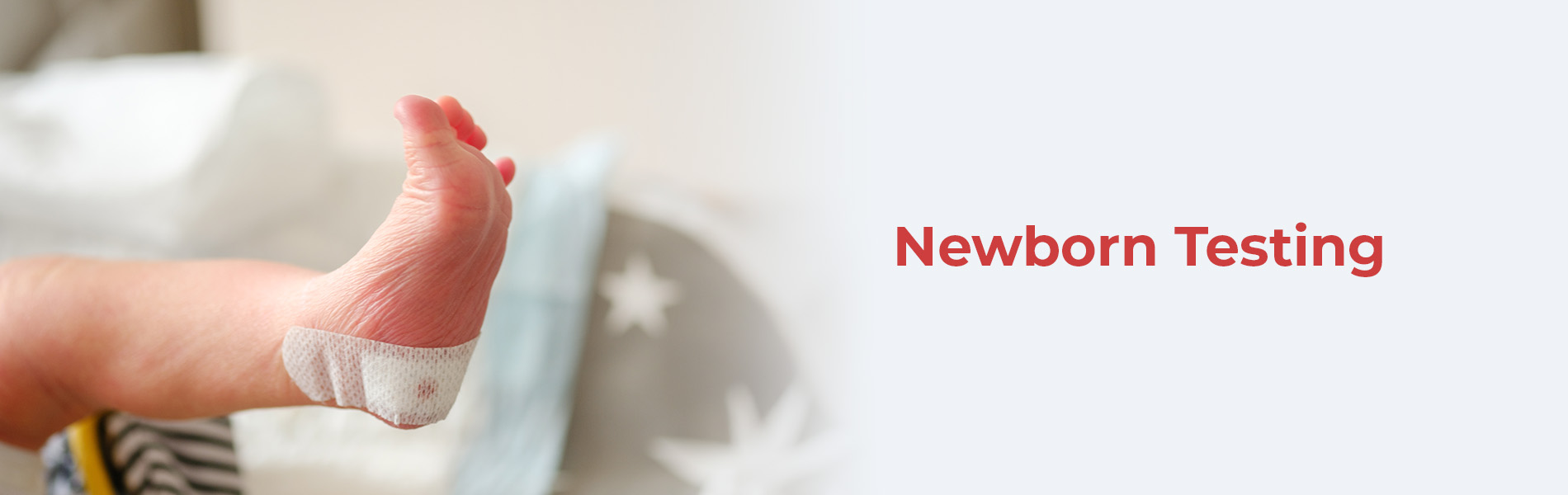
Blood Test: A small blood sample is collected through a gentle heel prick to check for rare but serious health conditions. The blood is placed on a special card and sent to a lab for testing. Results are usually available within 5–7 days.
Hearing Screening: This test checks for possible hearing loss. Tiny earphones are placed in your baby’s ears, and special equipment measures how your baby responds to sound.
Heart Screening: This screening looks for critical congenital heart defects (CCHDs) using a simple, painless test called pulse oximetry, which measures the oxygen level in your baby’s blood through sensors placed on the skin.
5. What Conditions Can Newborn Screening Detect?
To perform the screening, a small blood sample is taken from your baby’s heel using a gentle heel prick. This sample is then tested for several conditions, including:
Phenylketonuria (PKU)
Congenital hypothyroidism
Congenital adrenal hyperplasia
Sickle cell disease
Cystic fibrosis
Inborn errors of metabolism
Primary immunodeficiency disorders
In addition to the blood test, newborn screening may also include:
Hearing screening, which helps identify hearing loss early and supports normal speech and language development
Congenital cytomegalovirus (cCMV) testing, often recommended if a baby does not pass the initial hearing test
Pulse oximetry screening, which measures oxygen levels in the blood to detect critical congenital heart disease (CCHD)
Bilirubin screening, used to check for jaundice caused by excess bilirubin in the baby’s blood.
6. Does Newborn Screening Hurt the Baby?
Most newborn screening tests are quick and involve very little discomfort. The heel-prick blood test may cause brief irritation, but it is a safe procedure and is routinely performed for newborns around the world.
7. Why Do Some Babies Need Repeat Testing?
In some cases, a baby may need to be retested as part of the newborn screening process. This can happen if the first blood sample was collected too early, if the baby was born prematurely or had a low birth weight, or if the baby received a blood transfusion before the initial screening. Retesting helps ensure that the results are accurate and that any potential health conditions are identified as early as possible.
8. What Happens If a Screening Test Is Positive?
Most newborn screening results come back normal. If a result is not normal, it does not necessarily mean that your baby has a health condition, it may simply indicate the need for further testing. In such cases, your baby’s healthcare provider will recommend a diagnostic test to confirm whether a condition is present. If the diagnostic test results are normal, no further testing is required. However, if the results indicate a health concern, your provider will guide you on the appropriate next steps and treatment options for your baby.
9. Will All Babies Get Newborn Screening?
Yes. Newborn screening is considered a standard part of post-birth care and is recommended for all babies regardless of family history or insurance status.
10. How Do Parents Receive the Test Results?
Most results are sent to your baby’s paediatrician or healthcare provider. If a result suggests a possible health condition, doctors will contact parents quickly to arrange follow-up testing.1
Conclusion
Newborn screening may seem like a small step after delivery, but it plays a powerful role in protecting your baby’s future health. These simple tests help identify conditions that might otherwise go unnoticed in the early days of life. When detected early, many of these conditions can be managed or treated effectively, allowing babies to grow and develop normally.
For parents, understanding newborn screening can bring reassurance during a time filled with new experiences and emotions. It’s one of the earliest ways healthcare providers help ensure your baby gets the healthiest possible start.