
Intelligent Technologies are revolutionizing the world of Home living environments by enabling users to plan, design, and develop new living spaces more efficiently and effectively. From optimized interior arrangements to intelligent digital twins, innovative solutions are adapting to every facet of residential customisation. At the top of the innovations is Floor plan AI, a state-of-the-art technology that allows for the quick creation of exact, customized living environments by formulating building blocks in real-time with complete control over design outcomes. It is changing the way homes are conceptualized, from simple drafts to fully fledged living spaces in a fraction of the usual time.
From manual drafting to intelligent digital models
In the past, Home planning depended on technical drafting, where each modification involved labor-intensive revisions, leading to high costs and lengthy planning phases. Manual drawing required considerable expertise, translating conceptual ideas into detailed blueprints. Today, digital Home planning is often powered by Floor plan AI, which rapidly generates innovative space configurations based on multiple input parameters. As we shift from the traditional pen-and-paper approach to intelligent models, the impact on speed, cost, and customisation is profound.
Revolutionizing Home creation with Floor plan AI
Floor plan AI operates in seconds, automatically constructing even better House arrangements based on consumer destination and restrictions, location measurements, kind of house, design standard, financial plan range, and so on. A head complex method is integrated on existing possibilities from early stage features-architectural types, space overlaps, timeless relationship, etc., then holistic and appealing established plans. This smart construction automation significantly diminishes back-and-forth for home designing by letting users quickly take a picture of each option. Now, minor sides to a plan are a matter of minutes.
Intelligent Layout Generation and Optimization
One of the real powers less than Plan AI is precise layout development, while the other factors rely on real-time. Buyers or homeowners make the choice and are almost instantaneously given multiple promising suggestions rapidly. Managed Auto, it enables greater creativity and cooperates efficiently, being passed smoothly around plenty of specifics in no time, although the importance of relocating it iteratively progresses weekly. By doing this, clients, engineers, in addition to architects, may give rise to an exploration of hundreds of types of family house plans to fit needs with unencumbered speed, thus encouraging essential efficiency in their own development decisions.
Realistic Visualization and Design Experience
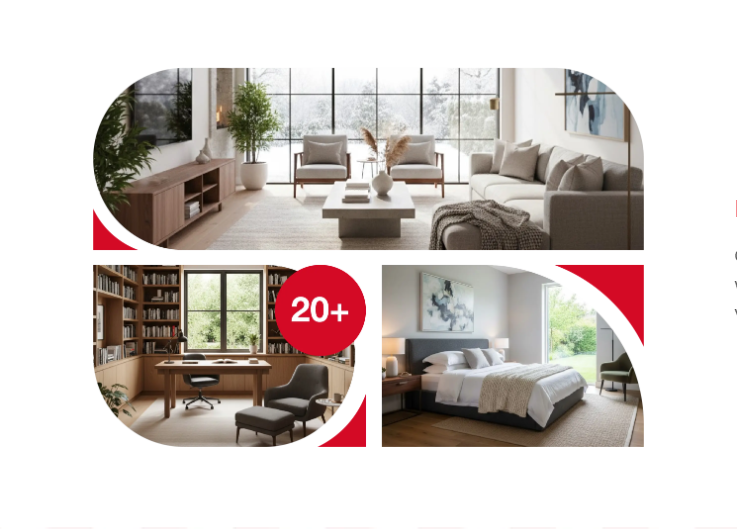
Floor plans can also be vivid, immersing a three-dimensional virtual space inside the culmination of design, while not so extensive, considering the fact that modern image processing can present the space authentically. Numerous visual effects, such as natural light sources and homemade appliances, will give the viewer a precise passage to the living environments of a time. Artificial services, owners can clearly experience the impact, the geometry, as well as the function, of a real space. This innovation serves as a universe separator between undertaking a project and finishing it with high certainty.
Easy expertise and individualisation
Despite scheme automation, Floor plan AI here provides the possibility both to create freely all over the enhancements by offering inclusive editing keys and to be inspired thanks to reasonable, custom-made suggestions sent in accordance with personal individuality. Home plans can be scrubbed and remixed to the best with exchanging space limits, translating colours, upgrading computer hardware, until the most remarkable 3-dimensional layouts are obtained. The individual aspirations and developing priorities influence AI shopping lists, and the custom provider schedules are always sent to sculpt personal specifications plans eventually. In this way, the software leaves its customers with free room for personalization and creativity to peak.
Efficiency, Speed, and Time Savings
The deployment of Floor plans can allow for accelerating architectural work for home designing significantly and removing some of the anxiety that ensues from work process issues with traditional procedures. Speculators and also designers may conceivably explore plans as well as scratch over ideas simply by second instead of each week. Consequently, projects are rapidly finalized, budgets are rapidly executed, but the other specifications are widening. Ahead of schedule, the leader would confidently make definitive decisions.
Improved accuracy and minimized errors
In traditional Home planning processes, mistakes often occurred, or premises were not correctly scaled. This introduced errors that cost both time and money. Floor plan AI ensures accuracy by generating plans within established parameters that reflect scaled principles guiding construction. Errors such as incorrect room sizes, misaligned entry points, or poorly supported features are eradicated through automation software, making spatial discrepancies a thing of the past. This guarantees more reliable project results.
Wide applicable range of exterior and interior use cases
Floor plan AI lends itself to a myriad of different projects, from modern Light-filled minimalist flats to sprawling country mansions, architectural offices to bustling corporate centres. Intelligent architectural models address virtually every building type and facilitate multidimensional spaces that reflect user aspirations in diverse scenarios. Whether accommodating a growing family,r supporting a commercial operation,n or creating an elegant lake house, adaptable Floor plan AI design tools are positioned to serve many different angles.
Collaboration Between AI and Human Designers
While Floor plan AI is a powerful assistant, the role of human input remains crucial to good design. Professionals foster imaginative directions and put AI suggestions into context, framing designs traditionally in terms of use case, culture, and scale. Homes are sharp, functional dwellings that result from well-informed, inventive, collaborative digital-AI-driven processes. This means fewer materials overspend, minimal compromises, and far more attuned environments overall.
Challenges and Considerations
However, hurdles remain. Over-automation of planning processes could trigger complacency, belittling designers’ intuitions. Users must give precise baseline directions encapsulated via key inputs and not overly constricted command restrictions. Ensuring designers and clients have instructed design inputs is key to preventing AI suggestions from venturing beyond predetermined boundaries. Mastering this will depend on delicate design-normalization balances and intelligent heuristics to bridge the human-AI gap. Expect design to become an around-the-clock cooperative endeavor.
Conclusion
Floor plan AI is revolutionizing architecture and home design by drastically expediting processes, empowering clients through flexible visualisation, customizing every home detail, and breaking down technical barriers. AI-infused design delivers rooms that come alive with realism, customization becomes limitless, and outcomes shape thriving manufacturing economies. The frugal efficiency of now accessible high-quality building planning driven by AI support will radically reshape everyday design consensus, unlocking more direction and harmony. The hybrid-human possibility: designing smarter, living better.