
Introduction
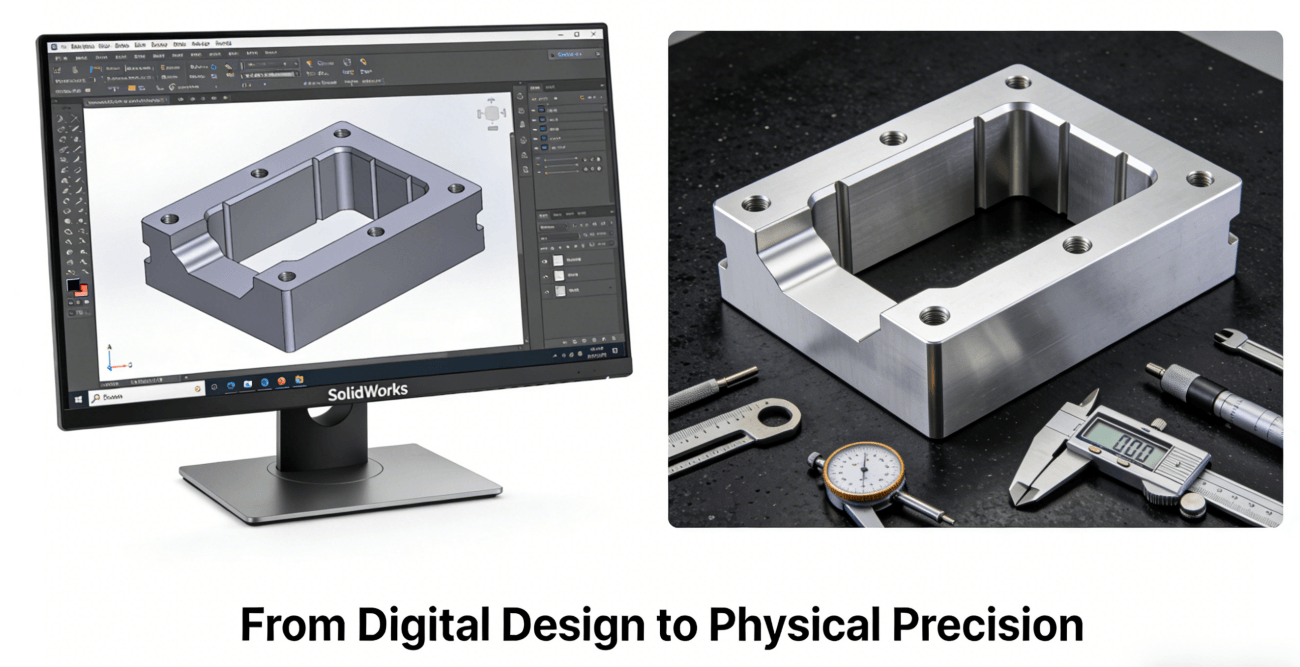
In the digital realm, designers and engineers can create perfect 3D models, for example, product logos with very complicated fonts. However, the problem of making these complex designs into real physical aluminum parts by using CNC Machining Processes often leads to the results of warping, dimensional inaccuracies, and surface defects, thus resulting in scrapped prototypes, cost overruns, and project delays.This kind of thing usually happening not because of the product design itself but because of the lack of understanding of material properties, limitations of traditional machining, and manufacturing capabilities. Complex geometries and fragile features are particularly difficult for conventional methods.
In this article, we are going to take a closer look at the main problems in aluminum machining and also present industrial manufacturing solutions with the help of which can achieve almost perfect copying of a digital design and physical part. These solutions involve 5-axis technology and intelligent process control. Once the five key questions have been answered, the technology behind the reliable manufacturing will be revealed.
Why are complex aluminum designs prone to deformation during machining?
Aluminum is also quite lightweight and easily machinable, but at the same time, its high rate of thermal expansion and softness are some of the challenges that are associated with machining aluminum using CNC machining. As aluminum is cut, thermal expansion occurs because of the heat that is produced during cutting. When this expansion occurs and is later cooled, it contracts.Design complexity is one of the major factors. Thin-wall machining is a typical example of a challenge. When wall thickness becomes less than 1mm, the rigidity of the structure decreases drastically, which results in the part becoming more prone to chatter and tool deflection under cutting forces.
Other factors such as deep cavities or asymmetric structures can lead to an uneven distribution of cutting forces and heat build-up, leading to the creation of internal stress. The Society of Manufacturing Engineers (SME) conducted a study on "Metal Cutting Dynamics" where they considered machining vibrations as the main factor responsible for the loss of accuracy, which by reducing the surface finish and making the tool wear faster, in turn lead to major issues with dimensional control.
Besides, the traditional 3-axis machines are not capable of handling complex contours as they usually require multiple setups and tool changes. Each new fixture presents another source for error stack-up. Since the tool angle is fixed, it is hard to maintain an optimal cutting posture for thin walls or deep cavities, which increases the chance of deformation.
How does 5-axis CNC technology solve deformation and accuracy issues in aluminum parts?
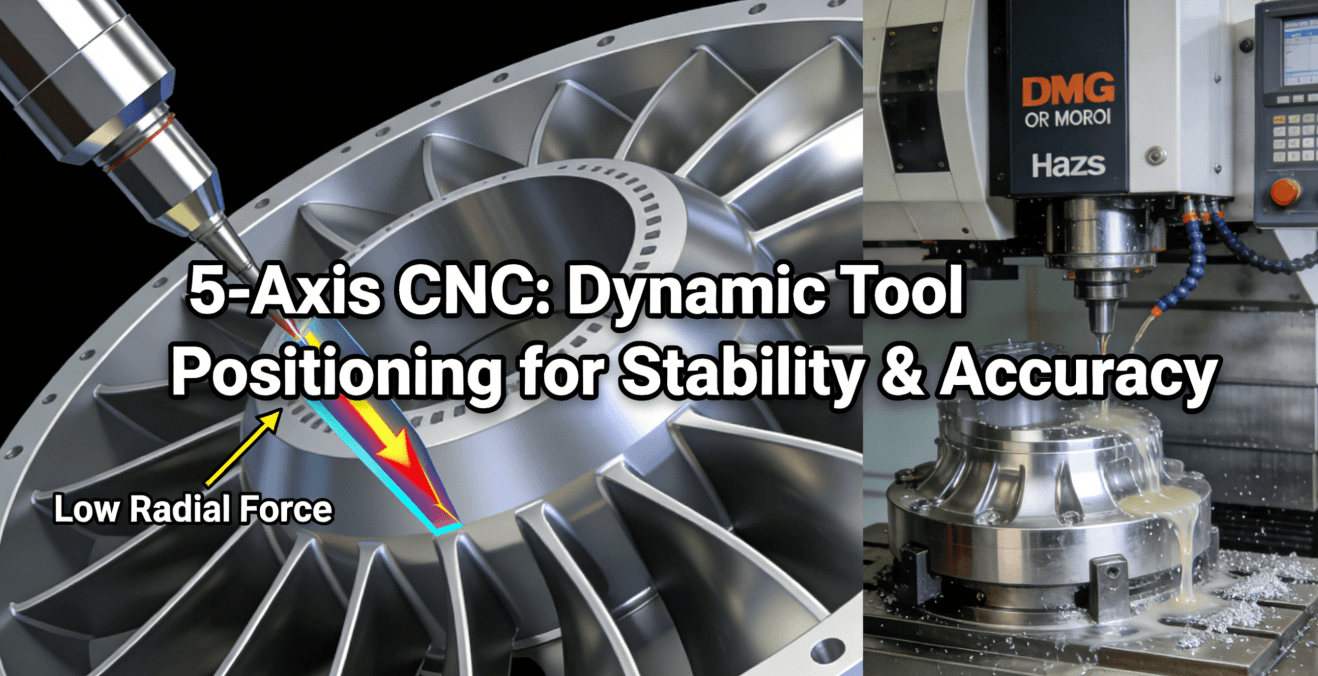
5-axis CNC technology offers the fundamental solution to the deformation problems of complex aluminum components. The addition of two rotational axes enables the cutting tool to access the workpiece from almost any direction. Therefore, it is possible to achieve multi-directional cutting.
How 5-Axis Machining Solves Key Challenges
5-axis CNC machining directly addresses the core issues of deformation and inaccuracy in aluminum parts through two fundamental advantages.
Dynamic Tool Positioning for Stability
The machine dynamically orients the cutter. For thin walls, it engages the material with the tool's side rather than its tip, drastically reducing radial forces. This "gentle" cutting minimizes vibration, enabling stable Precision Aluminum Machining of delicate features.
Unmatched Accuracy from a Single Setup
The technology allows complete machining of complex parts in one clamping. This eliminates the cumulative errors from multiple re-fixturings, a critical flaw in traditional methods. Combined with rigid construction, it allows holding exceptional tolerances, a benefit recognized in industry guidelines like the VDI 2851 for mold making.
The Critical Role of Process Expertise
Technology alone is insufficient. Success in aluminum CNC machining hinges on deep process knowledge for selecting the optimal strategy. As explored in the article Deep Dive into the Various Types of CNC Machining, 5-axis represents a sophisticated manufacturing philosophy, not merely an equipment upgrade.
Milling or Turning for Aluminum Parts? A Breakdown of Key Decision Factors
For aluminum part fabrication, milling and turning are the two core processes. Choosing one or a combination directly impacts cost, efficiency, and final quality. A competent CNC Machining Parts Supplier will provide expert recommendations based on the design itself.
Selecting the Optimal Process: A Geometric Guide
The primary factor is part geometry. For rotational parts like shafts, turning is optimal. For parts with complex contours or thin walls, multi-axis milling excels. Components with both feature types require turn-mill machining, highlighting the need for a supplier with broad capabilities.
Capabilities and Collaboration
Choosing between milling and turning involves understanding their core strengths and the value of expert partnership.
Milling vs. Turning: Core Strengths
Milling uses a rotating tool on a fixed workpiece, ideal for complex 3D shapes. Turning rotates the workpiece against a tool, perfect for cylindrical forms and superior surface finishes. A proficient Custom Aluminum Parts Manufacturer evaluates geometry, batch size, and precision to recommend the best method.
The Value of Expert DFM Feedback
True expertise is proven through CNC machining tolerance service. The best partners provide proactive DFM analysis, suggesting design optimizations for more manufacturable, cost-effective, and reliable parts, ensuring project success.
Beyond the Machine Tool: What Other Technologies Ensure Aluminum Part Quality?
The battle for part quality extends far beyond the machine tool itself. A complete system of digital and intelligent tools, from virtual simulation to physical monitoring and prevention, forms the complete puzzle of a modern industrial manufacturing solution.
Advanced Digital Design Tools, like CAM simulation software, enable a full virtual machining cycle before any material is cut. They simulate toolpaths, calculate material removal rates, and predict cutting forces and thermal distortion, allowing for strategy optimization at the programming stage to avoid potential gouging, collision, and warpage risks. This acts as a "digital rehearsal" for every job.
Even before machining begins, an intelligent aluminum CNC machining quote system acts as the first quality gate. Uploading a 3D model triggers a cloud-based, rule-engine-driven automated DFM analysis, instantly flagging risks like excessive thin walls or hard-to-machine deep cavities. This guides design optimization from the quotation stage, preventing issues at the source.
How to Identify an Aluminum Parts Supplier Capable of "Design to Product"?
As the manufacturing world becomes increasingly globalized, the notion of a local "Aluminum Fabrication Near Me" has transformed into finding a global partner for an uninterrupted supply chain. The first step to finding a service provider that can truly execute from "design to product" is to analyze their capabilities in some major areas. Technical ability should be your starting point. Find out their complete list of equipment (do they have, for example, 5-axis or turn-mill centers?) and analyze samples of their work, especially pieces of similar complexity. Such evidence will demonstrate the level of their engineering skills.
The way of working together is the other important factor; you need to examine how quickly and thoroughly they give design for manufacturing (DFM) feedback, as it affects the efficiency of turning a design into a product. Secondly, quality systems and certification standards serve as major indicators of trust. Certifications such as ISO 9001 (quality), IATF 16949 (automotive), AS9100D (aerospace), and ISO 14001 (environmental) are the signs that the company follows a systematic, well-controlled process. Suppliers like JS Precision, with an extensive certification catalog, serve as a solid base when it comes to producing physical parts accurately from digital designs.
Conclusion
Transformation of a perfect digital design into a precise aluminum part is a systems engineering process that requires the best of materials science, advanced manufacturing processes, and quality control. The key to the process's success lies in the understanding of the inherent challenges involved in the process of Aluminum CNC Machining and the ability to select the right partners who have access to the most advanced technology like 5-axis CNC machines, quality management systems like ISO, IATF, and AS, and the most experienced engineers.
This way, the risks involved in the process can be mitigated to achieve the project's success. Your next innovative project deserves the best realization. Upload your 3D drawings today to avail a professional DFM report and a quote for precise aluminum parts.
Author Bio
This article is written by an industrial manufacturing solutions consultant with over 15 years of experience in bridging advanced digital design and precision manufacturing technologies, having played a key role in the successful launch of hundreds of high-end global projects.
FAQs
Q1: How long does it usually take to get a rough estimate for an aluminum CNC machined part?
A: When you use a sophisticated online quotation tool, getting a similar quote with the first DFM analysis is possible within a few hours of uploading your drawings, which is drastically quicker than working through the traditional method of inquiries.
Q2: Is 5-axis CNC machining operation a method suitable only for high-volume production?
A: Far from it. In fact, 5-axis CNC machining brings significant advantages even for one-off or low-volume production of complex parts, as these machines can operate with one single setup to complete all the features, thus not only saving the total time but also totally eliminating fixture errors. That is why such machines are perfect for prototypes and pilot runs.
Q3: What should I check if I want to know if my aluminum part design is suitable for CNC machining?
A: It is important to consider a few main points: minimum wall thickness (usually 0.8mm recommended), depth-to-diameter ratios, and internal corner radii. Good manufacturers will not only do a free DFM analysis for you but also identify potential problems and give you optimization advice directly.
Q4: What are the few common metals besides aluminum alloys perfect for high-precision CNC machining?
A: Stainless steel, titanium alloys, brass, and tool steels are the most commonly chosen metals for such work. Cases of material selection always involve the mix of properties like strength weight corrosion resistance, price, and machinability.
Q5: How do logistics and customs clearance work for global orders?
A: Experienced international manufacturing suppliers are typically able to provide you with full door-to-door logistics support. They handle export declaration, arrange international sea/air freight, accommodate clearance at the destination port, and finally deliver the order to your doorstep. You simply receive and inspect the finished parts in your vicinity which is a very convenient method.