

Introduction
Heavy machinery manufacturers are constantly confronted with formidable obstacles during the production of large-scale structural elements in terms of inaccuracy, delays, and assembly failures. All these pose an imminent threat to the schedule and budgeting of a particular project. The fundamental cause is the inadequacy of conventional techniques in managing the problems of machine deflection, thermal distortion, and lack of sufficient control processes, which hamper the ability to sustain accurate micron tolerance levels in dimensions spanning several meters.
This article analyzes the technological breakthroughs of the world's Top 5 providers of large-scale CNC milling, focusing on how they solve these industry pain points through environmental control, adaptive machining, and full-process quality traceability systems. The following sections will detail the core competitive advantages and technical implementation paths of these leading companies.
Why is it Difficult to Maintain ±0.05mm Precision Requirements for Large Parts?
Achieving a tolerance of ±0.05mm for large components is significantly more challenging than for smaller parts due to fundamental physical limitations. The primary adversary is thermal deformation. Heat generated by the machine tool's spindle, guides, and ball screws during extended operation, combined with ambient shop floor temperature fluctuations, causes micron-level distortion in the machine bed, which is directly transferred to the workpiece. Secondly, machine tool deflection and vibration are critical factors. During heavy duty CNC milling, the substantial cutting forces from machining massive parts can cause elastic deformation and chatter in machines with insufficient structural rigidity, severely impacting surface finish and dimensional stability. Finally, conventional large scale CNC milling processes often rely heavily on operator experience, lacking real-time feedback and compensation to dynamically correct these cumulative errors.
Therefore, achieving stable precision large part machining requires controlling these variables at their source. Leading service providers address this by creating a prerequisite environment through temperature and humidity-controlled clean rooms and utilizing machine tools with exceptional thermal stability and structural rigidity.
What are the Core Technical Advantages of the Global Top 5 Large CNC Milling Service Providers?
In the competitive landscape of overcoming these challenges, five global leaders in large CNC milling services stand out due to their distinct technological strengths. France's Fives Group integrates laser interferometers into its gantry machines for real-time accuracy compensation. In Austria, Weingärtner uses artificial intelligence for vibration suppression in its five-axis machine tools for heavy duty work, significantly enhancing efficiency and finish on complex shapes. In Germany, HACO FAT has achieved fame because of its flexible manufacturing system that can be modified to suit changes in production within the energy industry. In the United States, Fictiv optimizes the process from design through production using its digital manufacturing system.
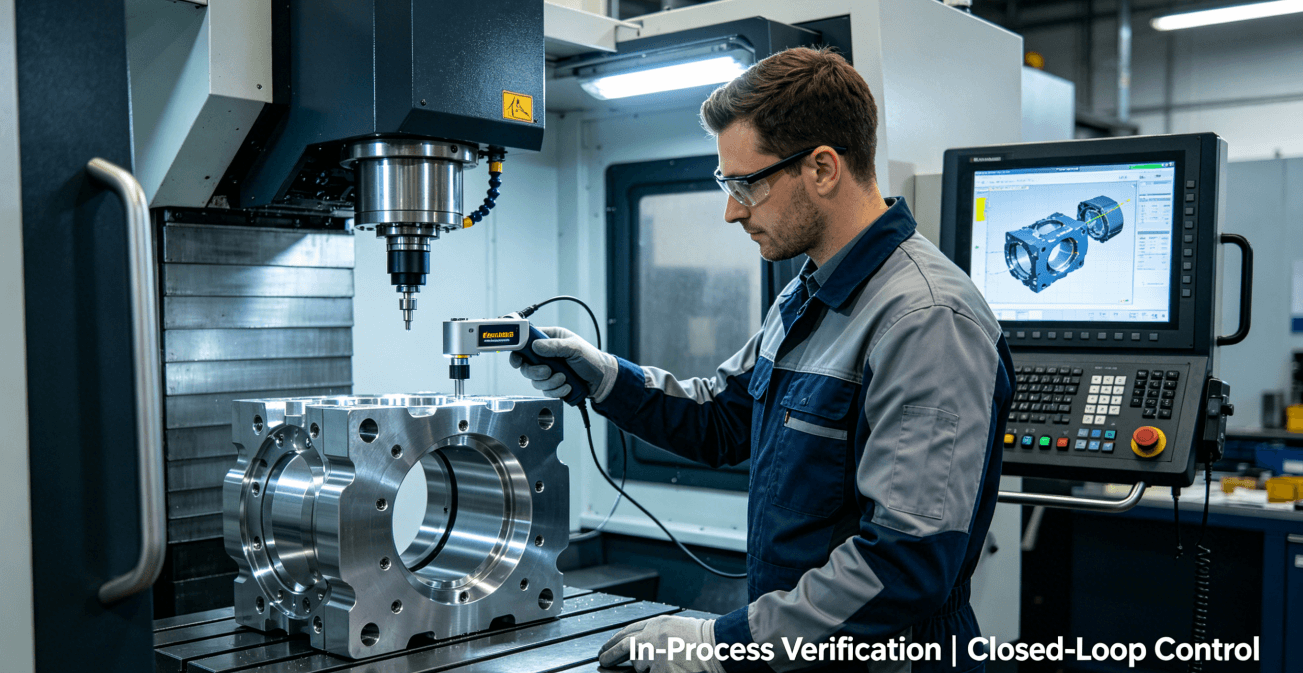
As one of these industry benchmarks, LS Manufacturing distinguishes itself with its "measurement-guided machining" closed-loop system. When machining aerospace wing spars or wind turbine gearbox housings, its machine-integrated on-board probing systems constantly measure critical part features. This data is fed back to the CNC for automatic tool compensation, ensuring the entire machining process for multi-meter spans remains under control, which is key to its competitiveness in high-end manufacturing.
How to Optimize Large Part Machining Plans Through Customized Design Services?
The value of partnering with a top-tier service provider extends far beyond access to advanced equipment; it lies in their front-end Custom Design Services. Industrial parts machining starts off with DFM analysis. Engineers get involved at the concept design stage, where they analyze the part geometry for manufacturability, thereby suggesting any optimizations. For instance, suggesting a change from a deep, monolithic pocket to a modular assembly, or optimizing internal ribbing layout, can eliminate hard-to-machine sharp corners, reducing machining time by over 30% while maintaining structural integrity.
This full-cycle design optimization service for precision heavy equipment parts encompasses everything from material science advice and residual stress control to assembly datum planning. A case study involved redesigning a large welded base from a single piece into a pre-stressed modular assembly. This not only solved welding distortion issues but also improved final assembly accuracy by 50% while lowering per-unit machining difficulty and total cost, proving that a superior design is half the battle in successful machining.
How Can Prototype Development Services Help Validate the Feasibility of Large Part Machining?
Prototype Development Services are crucial in order to minimize the risks that might arise from embarking on full-fledged production. It is especially important to validate the whole process when undertaking major capital intensive projects of large parts manufacturing.
The Complete Validation Process from Material to Process
A comprehensive prototype development is a systematic project. It starts with testing substitute materials, such as using a more machinable, lower-cost material to verify cutting parameters. Next, trial machining is conducted using production-intent processes to fully test fixture stability and toolpath optimization. Finally, comprehensive performance data is gathered through CMM measurement and functional testing of the prototype. A professional provider of high precision CNC milling offers a complete solution from prototype to production, ensuring a seamless transition.
Material and Heat Treatment Validation
Prototypes allow for practical verification of the internal quality consistency of selected materials in large sections and the behavior patterns after heat treatment, providing correction data for mass production processes.
Fixture and Machining Strategy Validation
The prototyping stage is the optimal time to test the rigidity and positioning accuracy of dedicated fixtures, as well as multi-operation workflow, optimizing setup times to enhance production efficiency.
Low-Volume Pilot Runs to Mitigate Production Risk
Following successful single prototype validation, conducting a pilot run is the next step. This aims to verify production cycle time, quality stability, and supply chain coordination, ensuring the entire manufacturing system is ready for reliable volume delivery, thereby clearing all obstacles for the client's production order.
H2: How to Evaluate and Select a Reliable Large CNC Milling Partner?
Given the availability of several suppliers, what is the way to make the right decision? Getting the quotation for a huge CNC milling project is one thing; far more important is conducting an evaluation on all fronts.
Judging Quality Management Through International Certifications
Certification provides an impartial standard to measure the quality management system of an organization. ISO 9001 is the basic certification required for quality management. IATF 16949 illustrates the process control capability of the automobile industry, while AS9100D sets the threshold standard of entry into the aerospace industry supply chain. Such certifications indicate that the company offers industrial CNC machining services with standard operating procedures.
The Importance of a Full-Process Quality Traceability System
The first-class suppliers have a traceability system that starts from the intake of the raw materials through machining processes to the finished product. The part has a distinct number which ties all machining data, inspections, and operation data, allowing for easy tracking of any problem back to its origin.
Cost Transparency and Optimization
There needs to be a complete breakdown of all the costs associated with material, machining time, inspection, and other secondary processes. In a good partnership, cost transparency is there, and the supplier offers recommendations about how to make your design better through experiences so as to minimize cost. Selecting the right supplier means finding a manufacturer who excels at CNC milling machines.
On-Site Audit and Communication
It is always desirable for the audit to be conducted onsite. First-hand knowledge about the workshop condition (temperature, humidity, cleanliness), condition of machinery, employee discipline, and level of advancement in quality inspection equipment can often tell you more than anything else.
H2:Conclusion
In conclusion, precision issues in big CNC machining are no longer addressed by technology breakthroughs alone. Instead, it needs to take a more comprehensive and systematic approach where the control of the environment, performance of the machine tools, adaptive processing procedures, and even full-process quality management play critical roles. The best companies in this field in 2026 have managed to provide precise control of micrometer accuracy through a combination of climate-controlled workshops, rigid machine tools, in-process measurement and compensation, and traceable quality control. As a project leader, the choice of a partner capable of offering advanced machinery equipment as well as experience and expertise is essential.H2:Author Biography
The author is a senior expert in the field of precision manufacturing with over 15 years of experience in high-precision machining for heavy equipment, specializing in accuracy control and process optimization technologies for large structural components. The author has provided core manufacturing solutions for multiple international major projects in the energy, rail transit, and heavy engineering sectors.
FAQs
Q1: What precision level is typically achievable in large CNC milling?
A: Under controlled environments and with advanced process control, leading service providers can typically achieve overall accuracy between ±0.05mm to ±0.1mm for parts over 2 meters. For local critical features, compensation technology can even achieve within ±0.02mm. They focus more on precision consistency across the entire part dimension rather than on a single extreme point value.
Q2: How long will it take you to manufacture a large part?
A: Depends very much on the materials, structural complexities, and sizes. A structurally complex piece of 2-3 meters in size with the body made of steel weldment will take from 2 to 4 weeks, from programming to delivery of the part. Well-organized and experienced suppliers will be able to make estimates more accurate and speed up production using parallel operations.
Q3: How can accuracy of the large part in the final assembly be guaranteed?
A: It all comes down to complete control throughout the process. Unified machining datums should be used along with in-process machining inspections and final comprehensive inspection performed by laser trackers or large CMMs based on comparison with digital assembly model to guarantee that the part was done right.
Q4: What are the main expenses for the large CNC machining?
A: They comprise the following elements: Expense for raw material (highest share usually); Cost of machinist worktime (depends on the level of equipment and time consumed); Wear of tools and fixtures; Inspection fee; Cost of heat treatment and surface finishing. An experienced supplier will help minimize costs.
Q5: What quality certifications should be prioritized when selecting a supplier?
A: ISO 9001 is the foundational quality management system certification. IATF 16949 is critical for the automotive industry; for aerospace, AS9100D is mandatory. Additionally, industry-specific certifications (e.g., for nuclear, marine) are also worth noting, as they collectively demonstrate the supplier's process control capabilities.