
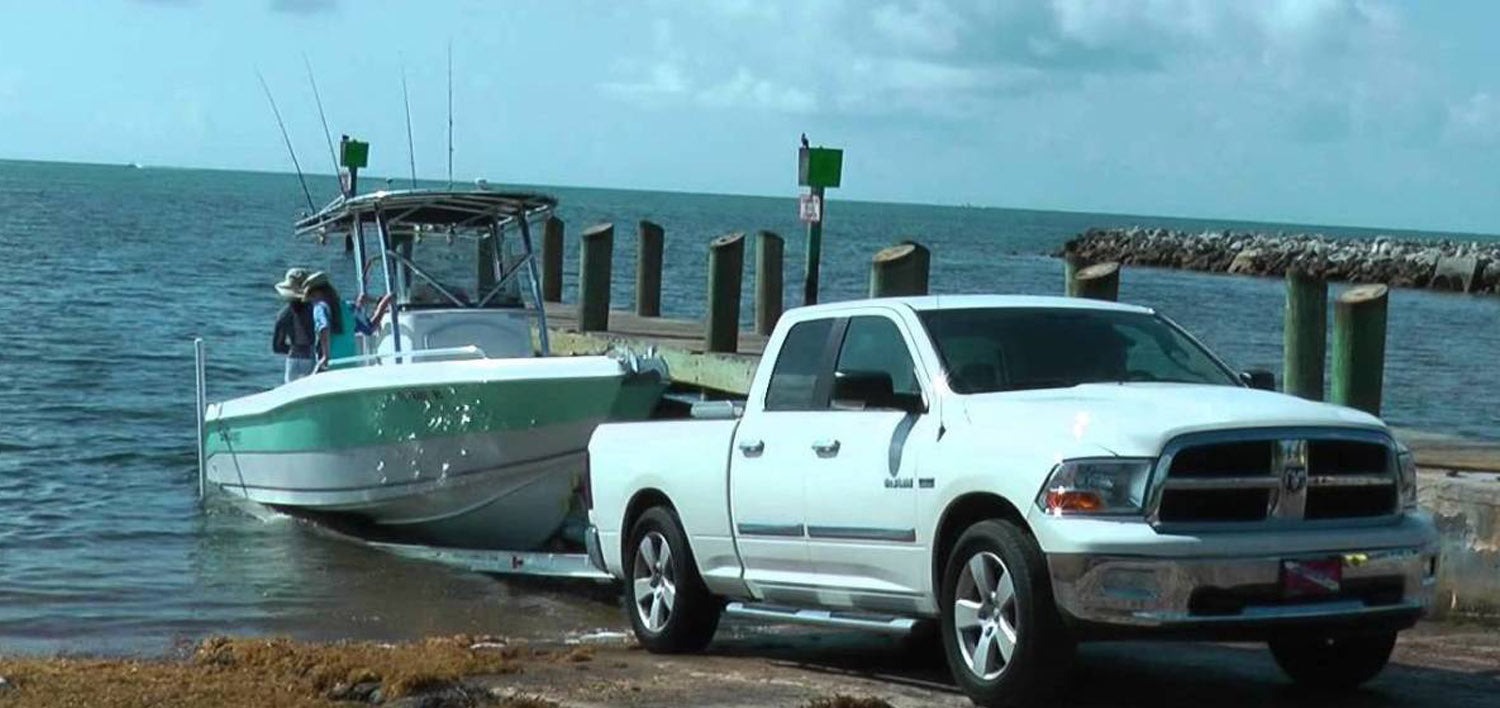
There is perhaps no feeling worse for a boater than sitting in the driver’s seat, foot firmly pressing the brake pedal, only to realize your truck is slowly sliding backward toward the water.
A truck sliding on a boat ramp is a common nightmare, especially during the busy summer months. Between steep inclines, low tides, and ramps coated in slippery green algae, even the most experienced drivers can find themselves in a dangerous situation.
Fortunately, keeping your tow vehicle on dry land comes down to understanding basic physics and implementing a few simple preventative measures.
Here is how to stop your truck from slipping on a slick boat ramp this summer.
Understand Why Trucks Slide
Before you can prevent a slide, you need to know why it happens. The most common culprit is a sudden loss of traction on the rear tires.
When you back your boat trailer into the water with the transom straps still tightly secured, the buoyancy of the boat wants to float. Because it is still attached to the trailer, the boat lifts the trailer upward.
This upward force transfers to the trailer hitch, effectively lifting the rear of your truck. Once the weight comes off your rear drive wheels, your tires lose their friction against the slick, algae-covered concrete, and gravity pulls the entire rig into the water.
1. Remove Transom Straps Before the Water
To prevent the boat from lifting your truck’s rear axle, always remove your rear transom straps before you back down the ramp.
Leave the bow strap connected to the winch so the boat doesn’t slide off prematurely, but allow the stern to float freely the moment it hits the water. This ensures your truck’s weight stays firmly planted on the pavement.
2. Master Your Parking Brake
Relying solely on your transmission’s "Park" setting is a critical mistake. When you shift into Park, a small metal pin called a parking pawl engages the transmission gear.
On a steep incline with thousands of pounds pulling backward, that small pin can fail or allow enough roll to trigger a slide. Always fully engage your emergency parking brake before taking your foot off the brake pedal or stepping out of the cab.
3. Shift Weight Over the Drive Axle
Traction requires friction, and friction requires weight. If you are driving a 2WD or rear-wheel-drive pickup, your truck bed is likely light, making the rear wheels prone to slipping. You can dramatically increase your grip by adding weight directly over the rear axle.
Keep a few heavy sandbags in the truck bed, or safely have a couple of crew members sit in the back while you navigate the ramp. Many drivers who transport vehicles for services like black car service Orlando also use similar weight distribution techniques to improve traction when handling vehicles in tricky conditions.
4. Optimize Your Tires and Gear
Sometimes, concrete covered in wet algae is simply too slick for standard highway tires. If you frequently launch at tricky locations, consider dropping your rear tire pressure by a few PSI to widen the tire’s footprint and increase grip (just remember to re-inflate them later).
For severe ramps where slippage is a constant threat, you shouldn't rely on luck. Keep high-quality wheel chocks handy to block the front tires while you load or unload.
If your truck does get stuck or begins to spin its tires on the slippery grade, outfitting your tires with a heavy-duty commercial traction aid can bite through the slime and mud, providing the instant mechanical grip needed to pull your rig safely up the incline.
5. Take It Slow
Finally, never let the pressure of a busy summer boat ramp rush you. Hitting the gas too hard when trying to pull the boat out will only cause your tires to spin, polishing the wet algae into an ice-like surface. Ease into the throttle smoothly, keep your vehicle in 4WD (if equipped), and communicate clearly with your spotter.
By preparing your gear, managing your payload, and respecting the ramp's conditions, you can ensure your truck stays exactly where it belongs—safely on dry land.